
Itale ni aina ya miamba ya igneous inayochimbwa kwa sababu ya nguvu yake kubwa, msongamano, uimara, na upinzani dhidi ya kutu. Lakini itale pia ina matumizi mengi sana - sio tu kwa miraba na mistatili! Kwa kweli, Tunafanya kazi kwa ujasiri na vipengele vya itale vilivyoundwa katika maumbo, pembe, na mikunjo ya tofauti zote mara kwa mara - na matokeo bora.
Through our state of the art processing, cut surfaces can be exceptionally flat. These qualities make granite the ideal material to create custom-size and custom-design machine bases and metrology components. Granite is:
■ inayoweza kutengenezwa
■ tambarare kabisa inapokatwa na kukamilika
■ sugu kwa kutu
■ kudumu
■ kudumu kwa muda mrefu
Vipengele vya granite pia ni rahisi kusafisha. Unapotengeneza miundo maalum, hakikisha umechagua granite kwa faida zake bora.
MATUMIZI YA VIWANGO / UVAAJI WA JUU
Granite inayotumiwa na ZHHIMG kwa bidhaa zetu za kawaida za sahani za uso ina kiwango cha juu cha quartz, ambayo hutoa upinzani mkubwa dhidi ya uchakavu na uharibifu. Rangi zetu Nyeusi Bora zina viwango vya chini vya kunyonya maji, na hivyo kupunguza uwezekano wa vipimo vyako vya usahihi kutu wakati wa kuweka kwenye sahani. Rangi za granite zinazotolewa na ZHHIMG husababisha mwanga mdogo, ambayo ina maana kwamba macho hayatachoka sana kwa watu wanaotumia sahani. Tumechagua aina zetu za granite huku tukizingatia upanuzi wa joto katika juhudi za kupunguza kipengele hiki.
CUSTOM APPLICATIONS
Programu yako inapohitaji bamba lenye maumbo maalum, viingilio vya nyuzi, nafasi au uchakataji mwingine, utahitaji kuchagua nyenzo kama Nyeusi ya Jinan Nyeusi. Nyenzo hii ya asili hutoa ugumu wa hali ya juu, upunguzaji bora wa mtetemo, na uboreshaji wa uchakataji.
Ni muhimu kutambua kwamba rangi pekee si kiashiria cha sifa za kimwili za jiwe. Kwa ujumla, rangi ya granite inahusiana moja kwa moja na uwepo au kutokuwepo kwa madini, ambayo yanaweza yasiathiri sifa zinazounda nyenzo nzuri za sahani ya uso. Kuna granite za waridi, kijivu, na nyeusi ambazo ni bora kwa sahani za uso, pamoja na granite nyeusi, kijivu, na waridi ambazo hazifai kabisa kwa matumizi ya usahihi. Sifa muhimu za granite, kama zinavyohusiana na matumizi yake kama nyenzo ya sahani ya uso, hazina uhusiano wowote na rangi, na ni kama ifuatavyo:
■ Ugumu (kupotoka chini ya mzigo - kunaonyeshwa na Modulus of Elasticity)
■ Ugumu
■ Uzito
■ Upinzani wa kuvaa
■ Uthabiti
■ Unyevunyevu
Tumejaribu vifaa vingi vya granite na kulinganisha vifaa hivi. Hatimaye tunapata matokeo, granite nyeusi ya Jinan ndiyo nyenzo bora zaidi ambayo tumewahi kujua. Granite Nyeusi ya India na granite ya Afrika Kusini zinafanana na Granite Nyeusi ya Jinan, lakini sifa zao za kimwili ni ndogo kuliko Granite Nyeusi ya Jinan. ZHHIMG itaendelea kutafuta nyenzo zaidi za granite duniani na kulinganisha sifa zao za kimwili.
Ili kuzungumza zaidi kuhusu granite inayofaa kwa mradi wako, tafadhali wasiliana nasiinfo@zhhimg.com.
Watengenezaji tofauti hutumia viwango tofauti. Kuna viwango vingi duniani.
DIN Standard, ASME B89.3.7-2013 au Vipimo vya Shirikisho GGG-P-463c (Sahani za Uso wa Granite) na kadhalika kama msingi wa vipimo vyao.
Na tunaweza kutengeneza sahani ya ukaguzi wa usahihi wa granite kulingana na mahitaji yako. Karibu kuwasiliana nasi ikiwa unataka kujua maelezo zaidi kuhusu viwango zaidi.
Ubapa unaweza kuzingatiwa kama sehemu zote kwenye uso zikiwa ndani ya ndege mbili zinazofanana, ndege ya msingi na ndege ya paa. Kipimo cha umbali kati ya ndege ni ubapa wa jumla wa uso. Kipimo hiki cha ubapa kwa kawaida hubeba uvumilivu na kinaweza kujumuisha alama ya daraja.
Kwa mfano, uvumilivu wa ulalo kwa alama tatu za kawaida hufafanuliwa katika vipimo vya shirikisho kama ilivyoamuliwa na fomula ifuatayo:
■ Daraja la Maabara AA = (40 + mraba mlalo/25) x .000001" (pande moja)
■ Daraja la Ukaguzi A = Daraja la Maabara AA x 2
■ Chumba cha Zana Daraja B = Daraja la Maabara AA x 4.
Kwa mabamba ya uso ya ukubwa wa kawaida, tunahakikisha uvumilivu wa ulalo unaozidi mahitaji ya vipimo hivi. Mbali na ulalo, ASME B89.3.7-2013 na Vipimo vya Shirikisho GGG-P-463c hushughulikia mada ikiwa ni pamoja na: usahihi wa kipimo unaorudiwa, sifa za nyenzo za granite za sahani ya uso, umaliziaji wa uso, eneo la sehemu ya usaidizi, ugumu, mbinu zinazokubalika za ukaguzi, usakinishaji wa viingilio vyenye nyuzi, n.k.
Sahani za uso wa granite za ZHHIMG na sahani za ukaguzi wa granite zinakidhi au kuzidi mahitaji yote yaliyowekwa katika vipimo hivi. Kwa sasa, hakuna vipimo vinavyofafanua kwa sahani za pembe za granite, sambamba, au mraba mkuu.
Na unaweza kupata fomula za viwango vingine katikaPAKUA.
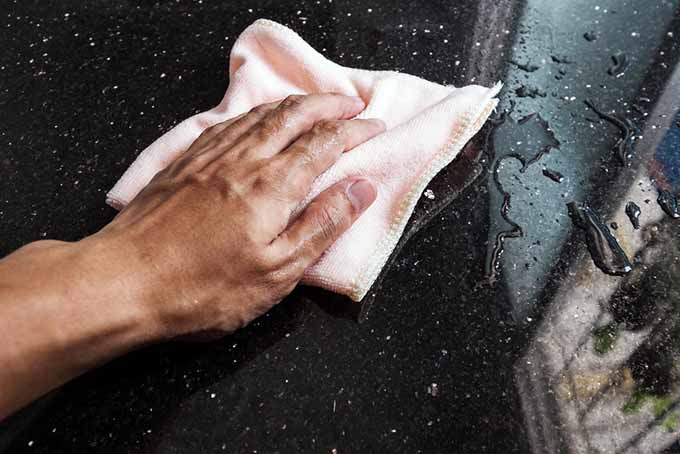
Kwanza, ni muhimu kuweka sahani safi. Vumbi linalovuja hewani kwa kawaida huwa chanzo kikuu cha uchakavu kwenye sahani, kwani huwa linaingia kwenye vipande vya kazi na sehemu za mguso za vizingiti. Pili, funika sahani yako ili kuilinda kutokana na vumbi na uharibifu. Maisha ya uchakavu yanaweza kuongezwa kwa kufunika sahani wakati haitumiki, kwa kuzungusha sahani mara kwa mara ili eneo moja lisipokee matumizi mengi, na kwa kubadilisha pedi za mguso za chuma kwenye kipimo kwa kutumia pedi za kabidi. Pia, epuka kuweka chakula au vinywaji baridi kwenye sahani. Kumbuka kwamba vinywaji baridi vingi vina asidi ya kaboni au fosforasi, ambayo inaweza kuyeyusha madini laini na kuacha mashimo madogo kwenye uso.
Hii inategemea jinsi sahani inavyotumika. Ikiwezekana, tunapendekeza kusafisha sahani mwanzoni mwa siku (au zamu ya kazi) na tena mwishoni. Ikiwa sahani itachafuka, haswa ikiwa na maji yenye mafuta au yanayonata, labda inapaswa kusafishwa mara moja.
Safisha sahani mara kwa mara kwa kutumia kioevu au kisafishaji cha uso kisichotumia maji cha ZHHIMG. Chaguo la suluhisho za kusafisha ni muhimu. Ikiwa kiyeyusho tete kitatumika (asetoni, kipunguza rangi ya lacquer, alkoholi, n.k.) uvukizi utapunguza uso, na kuupotosha. Katika hali hii, ni muhimu kuruhusu sahani irudi katika hali ya kawaida kabla ya kuitumia la sivyo makosa ya kipimo yatatokea.
Muda unaohitajika kwa sahani kurekebisha hali ya kawaida utatofautiana kulingana na ukubwa wa sahani, na kiasi cha kupoa. Saa moja inapaswa kutosha kwa sahani ndogo. Saa mbili zinaweza kuhitajika kwa sahani kubwa. Ikiwa kisafishaji cha maji kitatumika, pia kutakuwa na kupoa kwa uvukizi.
Sahani pia itahifadhi maji, na hii inaweza kusababisha kutu kwa sehemu za chuma zikigusana na uso. Baadhi ya visafishaji pia vitaacha mabaki yanayonata baada ya kukauka, ambayo yatavutia vumbi la hewani, na kwa kweli kuongeza uchakavu, badala ya kuyapunguza.
Hii inategemea matumizi ya sahani na mazingira. Tunapendekeza kwamba sahani mpya au nyongeza ya granite ya usahihi ipate urekebishaji kamili ndani ya mwaka mmoja wa ununuzi. Ikiwa sahani ya uso wa granite itatumika sana, inaweza kushauriwa kufupisha muda huu hadi miezi sita. Ukaguzi wa kila mwezi kwa makosa ya kipimo yanayorudiwa kwa kutumia kiwango cha kielektroniki, au kifaa kama hicho utaonyesha madoa yoyote yanayoendelea kuchakaa na huchukua dakika chache tu kufanya kazi. Baada ya matokeo ya urekebishaji wa kwanza kubainika, muda wa urekebishaji unaweza kupanuliwa au kufupishwa kama inavyoruhusiwa au inavyohitajika na mfumo wako wa ubora wa ndani.
Tunaweza kutoa huduma ili kukusaidia kukagua na kurekebisha bamba lako la uso wa granite.

Kuna sababu kadhaa zinazowezekana za tofauti kati ya vipimo:
- Uso huo ulioshwa kwa mchanganyiko wa moto au baridi kabla ya urekebishaji, na haukupewa muda wa kutosha wa kurekebisha
- Sahani haijaungwa mkono ipasavyo
- Mabadiliko ya halijoto
- Rasimu
- Mwanga wa jua moja kwa moja au joto lingine linalong'aa kwenye uso wa bamba. Hakikisha kwamba taa za juu hazipashi joto uso
- Tofauti katika mteremko wa halijoto wima kati ya majira ya baridi na kiangazi (Ikiwezekana, jua halijoto ya mteremko wima wakati wa urekebishaji.)
- Bamba halikuruhusiwa muda wa kutosha kurekebisha hali baada ya usafirishaji
- Matumizi yasiyofaa ya vifaa vya ukaguzi au matumizi yasiyo na urekebishaji
- Mabadiliko ya uso yanayotokana na uchakavu
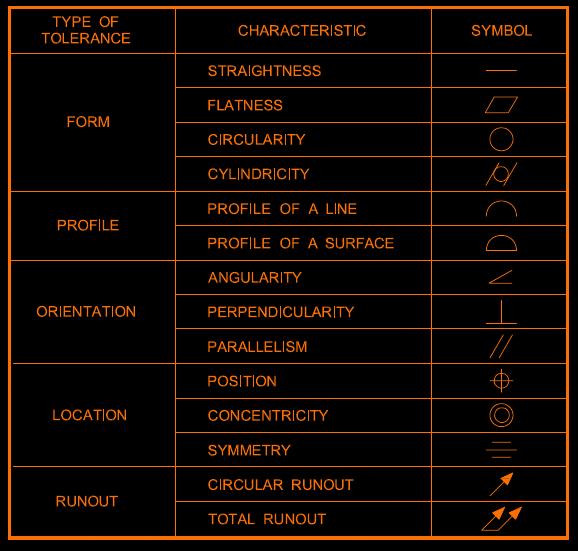
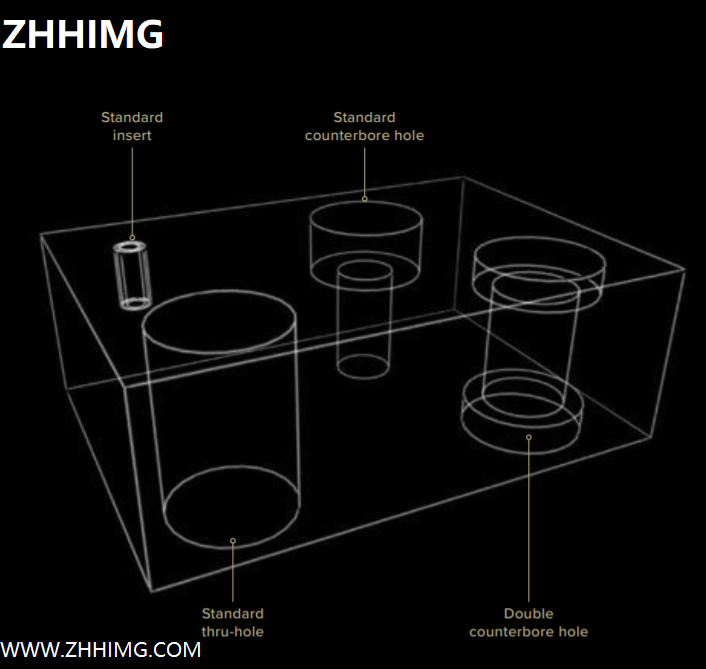
Ni aina ngapi za mashimo kwenye granite ya usahihi?
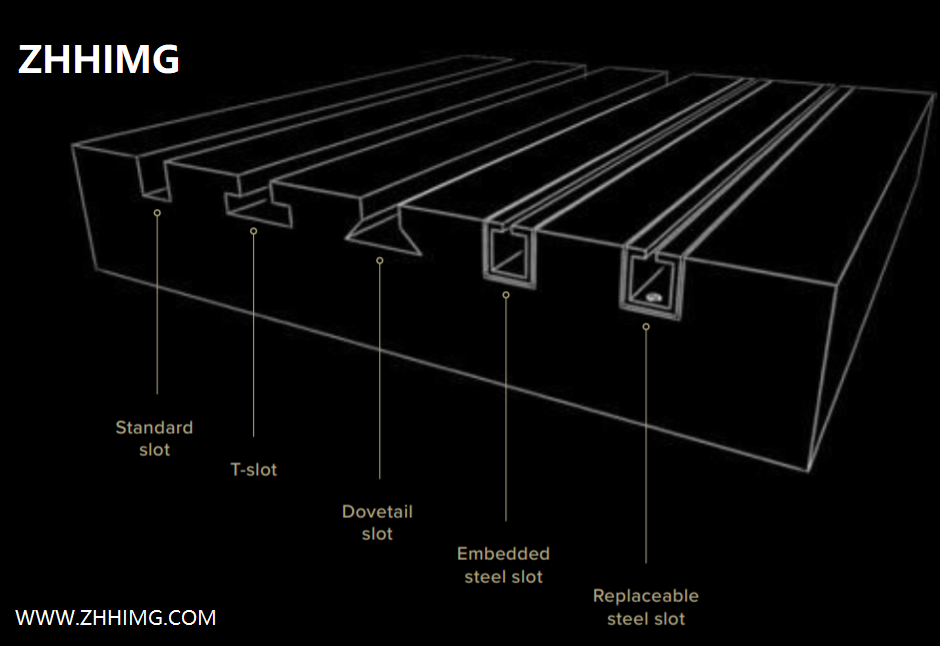
Nafasi kwenye Vipengele vya Granite ya Usahihi
Kwa viwanda vingi, vyumba vya ukaguzi na maabara, mabamba ya uso wa granite ya usahihi hutegemea kama msingi wa kipimo sahihi. Kwa sababu kila kipimo cha mstari hutegemea uso sahihi wa marejeleo ambapo vipimo vya mwisho huchukuliwa, mabamba ya uso hutoa kiwango bora cha marejeleo kwa ajili ya ukaguzi wa kazi na mpangilio kabla ya uchakataji. Pia ni besi bora za kutengeneza vipimo vya urefu na nyuso za kupima. Zaidi ya hayo, kiwango cha juu cha ulalo, uthabiti, ubora wa jumla na ufundi huzifanya kuwa chaguo nzuri kwa ajili ya kuweka mifumo ya kisasa ya kupima mitambo, kielektroniki na macho. Kwa michakato yoyote kati ya hii ya kipimo, ni muhimu kuweka mabamba ya uso yakiwa yamepimwa.
Repeat Measurements and Flatness
Vipimo vyote viwili vya ulalo na vya kurudia ni muhimu ili kuhakikisha uso una usahihi. Ulalo unaweza kuzingatiwa kama sehemu zote kwenye uso zikiwa ndani ya ndege mbili zinazofanana, ndege ya msingi na ndege ya paa. Kipimo cha umbali kati ya ndege ni ulalo wa jumla wa uso. Kipimo hiki cha ulalo kwa kawaida hubeba uvumilivu na kinaweza kujumuisha alama ya daraja.
The flatness tolerances for three standard grades are defined in the federal specification as determined by the following formula:
Kiwango cha DIN, Kiwango cha GB, Kiwango cha ASME, Kiwango cha JJS... nchi tofauti zenye msimamo tofauti...
In addition to flatness, repeatability must be ensured. A repeat measurement is a measurement of local flatness areas. It is a measurement taken anywhere on the surface of a plate that will repeat within the stated tolerance. Controlling local area flatness to a tighter tolerance than overall flatness guarantees a gradual change in surface flatness profile, thereby minimizing local errors.
Ili kuhakikisha bamba la uso linakidhi vipimo vya ulalo na vipimo vya kurudia, watengenezaji wa bamba za uso za granite wanapaswa kutumia Vipimo vya Shirikisho GGG-P-463c kama msingi wa vipimo vyao. Kiwango hiki kinashughulikia usahihi wa vipimo vya kurudia, sifa za nyenzo za granite ya bamba la uso, umaliziaji wa uso, eneo la sehemu ya usaidizi, ugumu, mbinu zinazokubalika za ukaguzi na usakinishaji wa viingilio vyenye nyuzi.
Checking Plate Accuracy
Kwa kufuata miongozo michache rahisi, uwekezaji katika bamba la uso wa granite unapaswa kudumu kwa miaka mingi. Kulingana na matumizi ya bamba, mazingira ya duka na usahihi unaohitajika, marudio ya kuangalia usahihi wa bamba la uso hutofautiana. Kanuni ya jumla ni kwamba bamba jipya lipate urekebishaji kamili ndani ya mwaka mmoja wa ununuzi. Ikiwa bamba linatumika mara kwa mara, inashauriwa kufupisha muda huu hadi miezi sita.
Before a surface plate has worn beyond specification for overall flatness, it will show worn or wavy posts. Monthly inspection for repeat measurement errors using a repeat reading gage will identify wear spots. A repeat reading gage is a high-precision instrument that detects local error and can be displayed on a high magnification electronic amplifier.
An effective inspection program should include regular checks with an autocollimator, providing actual calibration of overall flatness traceable to National Institute of Standards and Technology (NIST). Comprehensive calibration by the manufacturer or an independent company is necessary from time to time.
Variations Between Calibrations
Katika baadhi ya matukio, kuna tofauti kati ya upimaji wa bamba la uso. Wakati mwingine mambo kama vile mabadiliko ya uso yanayotokana na uchakavu, matumizi yasiyo sahihi ya vifaa vya ukaguzi au matumizi ya vifaa visivyo na upimaji yanaweza kuchangia tofauti hizi. Hata hivyo, mambo mawili ya kawaida ni halijoto na usaidizi.
One of the most important variables is temperature. For instance, the surface might have been washed with a hot or cold solution prior to calibration and not allowed sufficient time to normalize. Other causes of temperature change include drafts of cold or hot air, direct sunlight, overhead lighting or other sources of radiant heat on the surface of the plate.
There also can be variations in the vertical temperature gradient between winter and summer. In some cases, the plate is not allowed sufficient time to normalize after shipment. It is a good idea to record the vertical gradient temperature at the time the calibration is performed.
Another common cause for calibration variation is a plate that is improperly supported. A surface plate should be supported at three points, ideally located 20% of the length in from the ends of the plate. Two supports should be located 20% of the width in from the long sides, and the remaining support should be centered.
Only three points can rest solidly on anything but a precision surface. Attempting to support the plate at more than three points will cause the plate to receive its support from various combinations of three points, which will not be the same three points on which it was supported during production. This will introduce errors as the plate deflects to conform to the new support arrangement. Consider using steel stands with support beams designed to line up with the proper support points. Stands for this purpose are generally available from the surface plate manufacturer.
If the plate is properly supported, precise leveling is only necessary if an application specifies it. Leveling is not necessary to maintain the accuracy of a properly supported plate.
Extend Plate Life
Kufuata miongozo michache kutapunguza uchakavu wa bamba la granite na hatimaye, kutaongeza muda wake wa matumizi.
Kwanza, ni muhimu kuweka sahani safi. Vumbi linalovuja hewani kwa kawaida huwa chanzo kikubwa cha uchakavu kwenye sahani, kwani huelekea kupenya kwenye vipande vya kazi na nyuso za mguso za vipimo.
It also is important to cover plates to protect it from dust and damage. Wear life can be extended by covering the plate when not in use.
Zungusha sahani mara kwa mara ili eneo moja lisipokee matumizi mengi. Pia, inashauriwa kubadilisha pedi za mguso za chuma kwenye kipimo kwa pedi za kabidi.
Avoid setting food or soft drinks on the plate. Many soft drinks contain either carbonic or phosphoric acid, which can dissolve the softer minerals and leave small pits in the surface.
Where to Relap
Wakati bamba la uso la granite linahitaji kuwekwa upya, fikiria kama huduma hii itafanywa mahali pake au katika kituo cha urekebishaji. Daima ni vyema bamba hilo liwekwe upya kiwandani au katika kituo maalum. Hata hivyo, ikiwa bamba halijachakaa sana, kwa ujumla ndani ya inchi 0.001 ya uvumilivu unaohitajika, linaweza kuwekwa upya mahali pake. Ikiwa bamba limevaliwa hadi kufikia kiwango ambacho ni zaidi ya inchi 0.001 kutokana na uvumilivu, au ikiwa limepasuka vibaya au limeharibika, basi linapaswa kutumwa kiwandani kwa ajili ya kusaga kabla ya kuwekwa upya.
A calibration facility has the equipment and factory setting providing the optimum conditions for proper plate calibration and rework if necessary.
Uangalifu mkubwa unapaswa kutekelezwa katika kuchagua fundi wa urekebishaji na urekebishaji wa uso mahali pake. Omba idhini na uthibitishe kuwa vifaa ambavyo fundi atatumia vina urekebishaji unaoweza kufuatiliwa. Uzoefu pia ni jambo muhimu, kwani inachukua miaka mingi kujifunza jinsi ya kuzungusha granite kwa usahihi.
Critical measurements start with a precision granite surface plate as a baseline. By ensuring a reliable reference by using a properly calibrated surface plate, manufacturers have one of the essential tools for reliable measurements and better quality parts.Q
Checklist for Calibration Variations
1. Sehemu ya juu ilioshwa kwa mchanganyiko wa moto au baridi kabla ya kurekebishwa na haikupewa muda wa kutosha wa kurekebisha.
2. Sahani haijaungwa mkono ipasavyo.
3. Mabadiliko ya halijoto.
4. Rasimu.
5. Mwanga wa jua moja kwa moja au joto lingine linalong'aa kwenye uso wa bamba. Hakikisha kwamba taa za juu hazipashi joto uso.
6. Tofauti katika mteremko wa halijoto wima kati ya majira ya baridi na kiangazi. Ikiwezekana, jua halijoto ya mteremko wima wakati wa urekebishaji.
7. Bamba halikuruhusiwa muda wa kutosha kurekebisha baada ya usafirishaji.
8. Matumizi yasiyofaa ya vifaa vya ukaguzi au matumizi yasiyo na kipimo.
9. Mabadiliko ya uso yanayotokana na uchakavu.
Tech Tips
- Kwa sababu kila kipimo cha mstari hutegemea uso sahihi wa marejeleo ambapo vipimo vya mwisho huchukuliwa, mabamba ya uso hutoa sehemu bora ya marejeleo kwa ajili ya ukaguzi wa kazi na mpangilio kabla ya usindikaji.
- Controlling local area flatness to a tighter tolerance than overall flatness guarantees a gradual change in surface flatness profile, thereby minimizing local errors.
- Programu bora ya ukaguzi inapaswa kujumuisha ukaguzi wa mara kwa mara na kiotomatiki, kutoa urekebishaji halisi wa uwazi wa jumla unaoweza kufuatiliwa na Mamlaka ya Ukaguzi ya Kitaifa.
Miongoni mwa chembe za madini zinazounda granite, zaidi ya 90% ni feldspar na quartz, ambazo feldspar ndiyo nyingi zaidi. Feldspar mara nyingi huwa nyeupe, kijivu, na nyekundu-nyama, na quartz kwa sehemu kubwa haina rangi au nyeupe ya kijivu, ambayo huunda rangi ya msingi ya granite. Feldspar na quartz ni madini magumu, na ni vigumu kusogea kwa kisu cha chuma. Kuhusu madoa meusi kwenye granite, hasa mica nyeusi, kuna madini mengine. Ingawa biotite ni laini kiasi, uwezo wake wa kupinga msongo si dhaifu, na wakati huo huo wana kiasi kidogo cha granite, mara nyingi chini ya 10%. Hii ndiyo hali ya nyenzo ambayo granite ina nguvu sana.
Sababu nyingine kwa nini granite ni imara ni kwamba chembe zake za madini zimeunganishwa vizuri na zimepachikwa ndani ya kila mmoja. Mara nyingi vinyweleo hivyo huchangia chini ya 1% ya ujazo wote wa mwamba. Hii huipa granite uwezo wa kuhimili shinikizo kali na haipenyeki kwa urahisi na unyevu.
Vipengele vya granite vimetengenezwa kwa mawe bila kutu, upinzani wa asidi na alkali, upinzani mzuri wa uchakavu na maisha marefu ya huduma, hakuna matengenezo maalum. Vipengele vya usahihi wa granite hutumika zaidi katika utengenezaji wa vifaa vya tasnia ya mashine. Kwa hivyo, huitwa vipengele vya usahihi wa granite au vipengele vya granite. Sifa za vipengele vya usahihi wa granite kimsingi ni sawa na zile za majukwaa ya granite. Utangulizi wa utengenezaji wa vifaa na upimaji wa vipengele vya usahihi wa granite: Teknolojia ya utengenezaji wa usahihi na uchakataji mdogo ni maelekezo muhimu ya maendeleo ya tasnia ya utengenezaji wa mashine, na yamekuwa kiashiria muhimu cha kupima kiwango cha hali ya juu. Maendeleo ya teknolojia ya kisasa na tasnia ya ulinzi hayatenganishwi na teknolojia ya utengenezaji wa usahihi na uchakataji mdogo. Vipengele vya granite vinaweza kuteleza vizuri katika kipimo, bila kudumaa. Kipimo cha uso wa kazi, mikwaruzo ya jumla haiathiri usahihi wa kipimo. Vipengele vya granite vinahitaji kubuniwa na kuzalishwa kulingana na mahitaji ya upande wa mahitaji.
Sehemu ya maombi:
Kama tunavyojua sote, mashine na vifaa vingi zaidi vinachagua vipengele vya granite vya usahihi.
Vipengele vya granite hutumika kwa mwendo wa nguvu, motors za mstari, cmm, cnc, mashine ya leza...
Karibu kuwasiliana nasi kwa maelezo zaidi.
Vifaa vya kupimia granite na vipengele vya mitambo vya granite vimetengenezwa kwa granite Nyeusi ya ubora wa juu. Kutokana na usahihi wao wa juu, muda mrefu, uthabiti mzuri na upinzani wa kutu, vimetumika zaidi na zaidi katika ukaguzi wa bidhaa za tasnia ya kisasa na maeneo ya kisayansi kama vile nafasi ya anga ya mitambo na utafiti wa kisayansi.
Faida
-----Ngumu mara mbili kuliko chuma cha kutupwa;
----Mabadiliko madogo ya ukubwa husababishwa na mabadiliko ya halijoto;
-----Haina mikunjo, kwa hivyo hakuna usumbufu wa kazi;
----Haina vichaka au vijidudu kwa sababu ya muundo wa nafaka laini na unene usio na maana, ambao huhakikisha kiwango cha juu cha ulaini kwa maisha marefu ya huduma na haisababishi uharibifu kwa sehemu au vifaa vingine ;
----Uendeshaji usio na matatizo kwa matumizi ya vifaa vya sumaku;
----Inadumu kwa muda mrefu na haina kutu, na kusababisha gharama ndogo za matengenezo.
Sahani za uso wa granite zenye usahihi zimeunganishwa kwa usahihi wa hali ya juu ili kufikia usahihi na hutumika kama msingi wa kuweka mifumo ya kisasa ya kupimia mitambo, kielektroniki na macho.
Baadhi ya sifa za kipekee za bamba la uso wa granite:
Usawa katika Ugumu;
Masharti sahihi ya mzigo;
Kifyonzaji cha Mtetemo;
Rahisi Kusafisha;
Sugu ya Kufunga;
Unyevu Mdogo;
Haisababishi Mbaya;
Isiyo ya Sumaku
Faida za Bamba la Uso la Granite
First, the rock after a long period of natural aging, uniform structure, coefficient minimum, the internal stress completely disappear, not deformed, so the precision is high.
Tuma Barua Pepe
Skype
Kiingereza
Kijerumani
Kifaransa
Kireno
Kihispania
Kijapani
Kikorea
Kiarabu
Kiayalandi
Kigiriki
Kituruki
Kiitaliano
Kidenmaki
Kiromania
Kiindonesia
Kicheki
Kiswidi
Kipolandi
Kibasque
Kikatalani
Kiesperanto
Kihindi
Kilao
Kialbania
Kiamhariki
Kiarmenia
Kiazabajani
Kibelarusi
PKibengali
Kibosnia
Kibulgaria
Kisebuano
Kichichewa
Corsican
Kikroeshia
Kiholanzi
Kiestonia
Kifilipino
Kifini
Kifrisia
Kigalisia
Kijojia
Kigujarati
Kihaiti
Kihausa
KihawaiiKiebraniaKihmong
KihungariaKiaisilandiIgbo
KijavaKikannada
Kikazakh
Kikhmer
Kikurdi
Kyrgyz
Kilatini
Kilatvia
Kilithuania

Luxembou..
Kimasedonia
Kimalagasi
Kimalei
Kimalayalam
Kimalta
Maori
Kimarathi
Kimongolia
Kiburma
Kinepali
Kinorwe
Kipashto
Kiajemi
Kipunjabi
Kiserbia
Kisesotho
Kisinhala
Kislovakia
- Kislovenia
- Kisomali
- Kisamoa
- Kigaeli cha Kiskoti
- Kishona
- Kisindhi
- Kisundanese
- Kiswahili
- Tajik
- Kitamil
- Kitelugu
Kithai
Kiukreni
KiurduAKiuzbeki2KivietnamLKiwelisiAKixhosa
Kiyidi
Kiyoruba
Kizulu
Kinyarwanda
Kitatari
Waturuki
Uyghur
Kichina
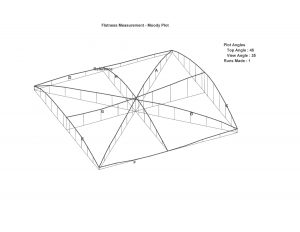
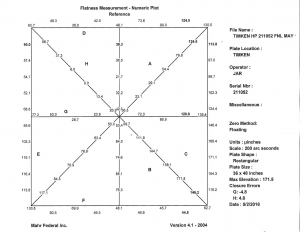
Routine surface plate calibration is necessary to ensure flatness and repeatability over time. The precision measurement group at Cross is ISO 17025 accredited for calibration of surface plate flatness and repeatability. We utilize the Mahr Surface Plate Certification System featuring:
- Moody and Profile Analysis,
- Isometric or Numeric plots,
- Multiple Run Average, and
- Automatic Grading According to Industry Standards.
The Mahr Computer Assisted Model determines any angular or linear deviation from absolute level, and is ideally suited for highly precise profiling of surface plates.
Intervals between calibrations will vary depending on the frequency of use, the environmental conditions where the plate is located, and the specific quality requirements of your company. Properly maintaining your surface plate may allow for longer intervals between each calibration, helps you avoid the added cost of relapping, and most importantly ensures the measurements you obtain on the plate are as accurate as possible. Although surface plates appear robust, they are precision instruments and should be treated as such. Here are some things to consider regarding care of your surface plates:
- Keep the plate clean, and if possible cover it when it is not in use
- Nothing should be placed on the plate other than gages or pieces to be measured.
- Don’t use the same spot on the plate every time.
- If possible, rotate the plate periodically.
- Respect the load limit of your plate
Precision Granite Base Can Improve Machine Tool Performances
Requirements are constantly increasing in mechanical engineering in general and in machine tool construction in particular. Achieving maximum precision and performance values without increasing costs are constant challenges to being competitive. The machine tool bed is a decisive factor here. Therefore, more and more machine tool manufacturers are relying on granite. Due to its physical parameters, it offers clear advantages that cannot be achieved with steel or polymer concrete.
Granite is a so-called volcanic deep rock and has a very dense and homogeneous structure with an extremely low coefficient of expansion, low thermal conductivity and high vibration damping.
Below you will discover why the common opinion that granite is mainly only suitable as machine base for high-end coordinate measuring machines is long outdated and why this natural material as a machine tool base is a very advantageous alternative to steel or cast iron even for high-precision machine tools.
We can manufacture granite components for dynamic motion, granite components for linear motors, granite components for ndt, granite components for xray, granite components for cmm, granite components for cnc, granite precision for laser, granite components for aerospace, granite components for precision stages...
High Added Value Without Additional Costs
The increasing use of granite in mechanical engineering is not so much due to the massive increase in the price of steel. Rather, it is because the added value for the machine tool achieved with a machine bed made of granite is possible at very little or no extra cost. This is proven by cost comparisons of well-known machine tool manufacturers in Germany and Europe.
The considerable gain in thermodynamic stability, vibration damping and long-term precision made possible by granite cannot be achieved with a cast iron or steel bed, or only at relatively high cost. For example, thermal errors can account for up to 75% of the total error of a machine, with compensation often attempted for by software – with moderate success. Due to its low thermal conductivity, granite is the better foundation for long-term precision.
With a tolerance of 1 μm, granite easily meets the flatness requirements according to DIN 876 for the degree of accuracy 00. With a value of 6 on the hardness scale 1 to 10, it is extremely hard, and with its specific weight of 2.8g/cm³ it almost reaches the value of aluminium. This also results in additional advantages such as higher feed rates, higher axis accelerations and an extension of the tool life for cutting machine tools. Thus, the change from a cast bed to a granite machine bed moves the machine tool in question into the high-end class in terms of precision and performance – at no extra cost.
Granite’s Improved Ecological Footprint
In contrast to materials such as steel or cast iron, natural stone does not have to be produced with a great deal of energy and using additives. Only relatively small amounts of energy are required for quarrying and surface treatment. This results in a superior ecological footprint, which even at the end of a machine’s life surpasses that of steel as a material. The granite bed can be the basis for a new machine or be used for completely different purposes such as shredding for road construction.
Nor are there any shortages of resources for granite. It is a deep rock formed from magma within the earth’s crust. It has ‘matured’ for millions of years and is available in very large quantities as a natural resource on almost all continents, including all of Europe.
Conclusion: The numerous demonstrable advantages of granite compared to steel or cast iron justify the increasing willingness of mechanical engineers to use this natural material as a foundation for high-precision, high-performance machine tools. Detailed information about granite properties, which are advantageous for machine tools and mechanical engineering, can be found in this further article.
A repeat measurement is a measurement of local flatness areas. The Repeat Measurement specification states that a measurement taken anywhere on the surface of a plate will repeat within the stated tolerance. Controlling local area flatness tighter than overall flatness guarantees a gradual change in surface flatness profile thereby minimizing local errors.
Most manufacturers, including imported brands, adhere to the Federal Specification of overall flatness tolerances but many overlook the repeat measurements. Many of the low value or budget plates available in the market today will not guarantee repeat measurements. A manufacturer who does not guarantee repeat measurements is NOT producing plates that meet the requirements of ASME B89.3.7-2013 or Federal Specification GGG-P-463c, or DIN 876, GB, JJS...
Both are critical to ensure a precision surface for accurate measurements. Flatness specification alone is not sufficient to guarantee measurement accuracy. Take as an example, a 36 X 48 Inspection Grade A surface plate, which meets ONLY the flatness specification of .000300". If the piece being checked bridges several peaks, and the gage being used is in a low spot, the measurement error could be the full tolerance in one area, 000300"! Actually, it can be much higher if the gage is resting on the slope of an incline.
Errors of .000600"-.000800" are possible, depending upon the severity of the slope, and the arm length of the gage being used. If this plate had a Repeat Measurement specification of .000050"F.I.R. then the measurement error would be less than .000050" regardless of where the measurement is taken on the plate. Another problem, which usually arises when an untrained technician attempts to resurface a plate on-site, is the use of Repeat Measurements alone to certify a plate.
The instruments that are used to verify repeatability are NOT designed to check overall flatness. When set to zero on a perfectly curved surface, they will continue to read zero, whether that surface is perfectly flat or perfectly concave or convex 1/2"! They simply verify the uniformity of the surface, not the flatness. Only a plate that meets both the flatness specification AND the repeat measurement specification truly meets the requirements of ASME B89.3.7-2013 or Federal Specification GGG-P-463c.
Ask us about or flatness specification and repeat measurement promise by calling +86 19969991659 or emailing INFO@ZHHIMG.COM
Yes, but they can only be guaranteed for a specific vertical temperature gradient. The effects of thermal expansion on the plate could easily cause a change in accuracy greater than the tolerance if there is a change in the gradient. In some cases, if the tolerance is tight enough, the heat absorbed from overhead lighting can cause enough of a gradient change over several hours.
Granite has a coefficient of thermal expansion of approximately .0000035 inches per inch per 1°F. As an example: A 36" x 48" x 8" surface plate has an accuracy of .000075" (1/2 of Grade AA) at a gradient of 0°F, the top and bottom are the same temperature. If the top of the plate warms up to the point where it is 1°F warmer than the bottom, the accuracy would change to .000275" convex ! Therefore, ordering a plate with a tolerance tighter than Laboratory Grade AA should only be considered if there is adequate climate control.
A surface plate should be supported at 3 points, ideally located 20% of the length in from the ends of the plate. Two supports should be located 20% of the width in from the long sides, and the remaining support should be centered. Only 3 points can rest solidly on anything but a precision surface.
The plate should be supported at these points during production, and it should be supported only at these three points while in use. Attempting to support the plate at more than three points will cause the plate to receive its support from various combinations of three points, which will not be the same 3 points on which it was supported during production. This will introduce errors as the plate deflects to conform to the new support arrangement. All zhhimg steel stands have support beams designed to line up with the proper support points.
If the plate is properly supported, precise leveling is only necessary if your application calls for it. Leveling is not necessary to maintain the accuracy of a properly supported plate.
Why Choose Granite for Machine Bases and Metrology Components?
The answer is 'yes' for almost every application. The advantages of granite include: No rust or corrosion, almost immune to warping, no compensating hump when nicked, longer wear life, smoother action, greater precision, virtually non-magnetic, low co-efficient of thermal expansion, and low maintenance cost.
Granite is a type of igneous rock quarried for its extreme strength, density, durability, and resistance to corrosion. But granite is also very versatile– it’s not just for squares and rectangles! In fact, Starrett Tru-Stone confidently works with granite components engineered in shapes, angles, and curves of all variations on a regular basis—with excellent outcomes.
Through our state of the art processing, cut surfaces can be exceptionally flat. These qualities make granite the ideal material to create custom-size and custom-design machine bases and metrology components. Granite is:
machineable
precisely flat when cut and finished
rust resistant
durable
long lasting
Granite components are also easy to clean. When creating custom designs, be sure to choose granite for its superior benefits.
STANDARDS / HIGH WEAR APPLICATIONS
The granite utilized by ZhongHui for our standard surface plate products has high quartz content, which provides greater resistance to wear and damage. Our Superior Black and Crystal Pink colors have low water absorption rates, minimizing the possibility of your precision gages rusting while setting on the plates. The colors of granite offered by ZhongHui result in less glare, which means less eyestrain for individuals using the plates. We have chosen our granite types while considering thermal expansion in an effort to keep this aspect minimal.
CUSTOM APPLICATIONS
When your application calls for a plate with custom shapes, threaded inserts, slots or other machining, you’ll want to select a material like Black Diabase. This natural material offers superior stiffness, excellent vibration dampening, and improved machinability.
Yes, if they are not too badly worn. Our factory setting and equipment allow the optimum conditions for proper plate calibration and rework if necessary. Generally, if a plate is within .001" of the required tolerance, it can be resurfaced on-site. If a plate is worn to the point where it is more than .001" out of tolerance, or if it is badly pitted or nicked, then it will need to be sent to the factory for grinding prior to relapping.
Great care should be exercised in selecting an on-site calibration and resurfacing technician. We urge you to use caution in selecting your calibration service. Ask for accreditation and verify the equipment that the technician will use has a National Inspection Institution traceable calibration. It takes many years to learn how to properly lap precision granite.
ZhongHui provides quick turn-around on calibrations performed in our factory. Send your plates in for calibration if possible. Your quality and reputation depend on the accuracy of your measurement instruments including surface plates!
Our black surface plates have a significantly higher density and are up to three times as stiff. Therefore, a plate made of the black does not need to be as thick as a granite plate of the same size to have equal or greater resistance to deflection. Reduced thickness means less weight and lower shipping costs.
Beware of others who use lower quality black granite in the same thickness. As stated above, properties of granite, like wood or metal, vary by material and color, and is not an accurate predictor of stiffness, hardness, or wear resistance. In fact, many types of black granite and diabase are very soft and not suitable for surface plate applications.
No. The specialized equipment and training necessary to rework these items requires that they be returned to the factory for calibration and rework.
Yes. Ceramic and granite have similar characteristics, and the methods used to calibrate and lap granite can be used with ceramic items as well. Ceramics are more difficult to lap than granite resulting in a higher cost.
Yes, provided that the inserts are recessed below the surface. If steel inserts are flush with, or above the surface plane, they must be spot-faced down before the plate can be lapped. If required, we can provide that service.
Yes. Steel inserts with the desired thread (English or metric) can be epoxy bonded into the plate at the desired locations. ZhongHui uses CNC machines to provide the tightest insert locations within +/- 0.005”. For less critical inserts, our locational tolerance for threaded inserts is ±.060". Other options include steel T-Bars and dovetail slots machined directly into the granite.
Inserts that are properly bonded using high strength epoxy and good workmanship will withstand a great deal of torsional and shear force. In a recent test, using 3/8"-16 threaded inserts, an independent testing laboratory measured the force required to pull an epoxy-bonded insert from a surface plate. Ten plates were tested. Out of these ten, in nine cases, the granite fractured first. The average load at the point of failure was 10,020 lbs. for gray granite and 12,310 lbs. for black. In the single case where an insert pulled free of the plate, the load at the point of failure was 12,990 lbs.! If a work piece forms a bridge across the insert and extreme torque is applied, it is possible to generate enough force to fracture the granite. Partially for this reason, ZhongHui gives guidelines for the maximum safe torque that can be applied the epoxy bonded inserts: https://www.zhhimg.com/standard-thread-inserts-product/
Yes, but only at our factory. At our plant, we can restore almost any plate to 'like-new' condition, usually for less than half the cost of replacing it. Damaged edges can be cosmetically patched, deep grooves, nicks, and pits can be ground out, and the attached supports can be replaced. In addition, we can modify your plate to increase its versatility by adding solid or threaded steel inserts and cutting slots or clamping lips, per your specifications.
Why Choose Granite?
Granite is a type of igneous rock formed in the Earth millions of years ago. The composition of igneous rock contained many minerals such as quartz that is extremely hard and wear-resistant. In addition to hardness and wear resistance granite has approximately half the coefficient of expansion as cast iron. As its volumetric weight is approximately one third that of cast iron, granite is easier to manoeuvre.
For machine bases and metrology components, black granite is the colour most used. Black granite has a higher percentage of quartz than other colours and is, therefore, the hardest wearing.
Granite is cost-effective, and cut surfaces can be exceptionally flat. Not only can it be hand lapped to achieve extremes of accuracy, but re-conditioning can be performed without moving the plate or table off-site. It is entirely a hand lapping operation and generally costs much less than re-conditioning a cast iron alternative.
These qualities make granite the ideal material to create custom-size and custom-design machine bases and metrology components such as the granite surface plate.
ZhongHui produces bespoke granite products that are created to support specific measurement requirements. These bespoke items vary from straight edges to tri squares. Due to the versatile nature of granite, the components can be produced to any size required; they are hard wearing and long-lasting.
Advantages of Granite Surface Plates
The importance of measuring on an even surface was established by British inventor Henry Maudsley in the 1800s. As a machine tool innovator, he determined that consistent production of parts required a solid surface for reliable measurements.
The industrial revolution created a demand for measuring surfaces, so engineering company Crown Windley created manufacturing standards. The standards for surface plates were first set by Crown in 1904 using metal. As the demand and cost for metal increased, alternative materials for the measuring surface were investigated.
In America, monument creator Wallace Herman established that black granite was an excellent surface plate material alternative to metal. As granite is non-magnetic and doesn’t rust, it soon became the preferred measuring surface.
A granite surface plate is an essential investment for laboratories and test facilities. A granite surface plate of 600 x 600 mm can be mounted on a support stand. The stands provide a working height of 34” (0.86m) with five adjustable points for levelling.
For reliable and consistent measurement results, a granite surface plate is crucial. As the surface is a smooth and stable plane, it enables instruments to be carefully manipulated.
The main advantages of granite surface plates are:
• Non-reflective
• Resistant to chemicals and corrosion
• Low coefficient of expansion compared with cart iron so less affected by temperature change
• Naturally rigid and hard-wearing
• The plane of the surface is unaffected if scratched
• Will not rust
• Non-magnetic
• Easy to clean and maintain
• Calibration and resurfacing can be done onsite
• Suitable for drilling for threaded support inserts
• High vibration damping
For many shops, inspection rooms and laboratories, precision granite surface plates are relied on as the basis for accurate measurement. Because every linear measurement depends on an accurate reference surface from which final dimensions are taken, surface plates provide the best reference plane for work inspection and layout prior to machining. They also are ideal bases for making height measurements and gaging surfaces. Further, a high degree of flatness, stability, overall quality and workmanship make them a good choice for mounting sophisticated mechanical, electronic and optical gaging systems. For any of these measurement processes, it is imperative to keep surface plates calibrated.
Repeat Measurements and Flatness
Both flatness and repeat measurements are critical to ensure a precision surface. Flatness can be considered as all points on the surface being contained within two parallel planes, the base plane and the roof plane. The measurement of distance between the planes is the overall flatness of the surface. This flatness measurement commonly carries a tolerance and may include a grade designation.
The flatness tolerances for three standard grades are defined in the federal specification as determined by the following formula:
Laboratory Grade AA = (40 + diagonal² / 25) x 0.000001 inch (unilateral)
Inspection Grade A = Laboratory Grade AA x 2
Tool Room Grade B = Laboratory Grade AA x 4
In addition to flatness, repeatability must be ensured. A repeat measurement is a measurement of local flatness areas. It is a measurement taken anywhere on the surface of a plate that will repeat within the stated tolerance. Controlling local area flatness to a tighter tolerance than overall flatness guarantees a gradual change in surface flatness profile, thereby minimizing local errors.
To ensure a surface plate meets both the flatness and repeat measurement specifications, manufacturers of granite surface plates should use Federal Specification GGG-P-463c as a basis for their specifications. This standard addresses repeat measurement accuracy, material properties of surface plate granites, surface finish, support point location, stiffness, acceptable methods of inspection and installation of threaded inserts.
Before a surface plate has worn beyond specification for overall flatness, it will show worn or wavy posts. Monthly inspection for repeat measurement errors using a repeat reading gage will identify wear spots. A repeat reading gage is a high-precision instrument that detects local error and can be displayed on a high magnification electronic amplifier.
Checking Plate Accuracy
By following a few simple guidelines, an investment in a granite surface plate should last for many years. Depending on plate usage, shop environment and required accuracy, frequency of checking the surface plate accuracy varies. A general rule of thumb is for a new plate to receive a full recalibration within one year of purchase. If the plate is used frequently, it is advisable to shorten this interval to six months.
Before a surface plate has worn beyond specification for overall flatness, it will show worn or wavy posts. Monthly inspection for repeat measurement errors using a repeat reading gage will identify wear spots. A repeat reading gage is a high-precision instrument that detects local error and can be displayed on a high magnification electronic amplifier.
An effective inspection program should include regular checks with an autocollimator, providing actual calibration of overall flatness traceable to National Institute of Standards and Technology (NIST). Comprehensive calibration by the manufacturer or an independent company is necessary from time to time.
Variations Between Calibrations
In some cases, there are variations between surface plate calibrations. Sometimes factors such as surface change resulting from wear, incorrect use of inspection equipment or use of noncalibrated equipment can account for these variations. The two most common factors, however, are temperature and support.
One of the most important variables is temperature. For instance, the surface might have been washed with a hot or cold solution prior to calibration and not allowed sufficient time to normalize. Other causes of temperature change include drafts of cold or hot air, direct sunlight, overhead lighting or other sources of radiant heat on the surface of the plate.
There also can be variations in the vertical temperature gradient between winter and summer. In some cases, the plate is not allowed sufficient time to normalize after shipment. It is a good idea to record the vertical gradient temperature at the time the calibration is performed.
Another common cause for calibration variation is a plate that is improperly supported. A surface plate should be supported at three points, ideally located 20% of the length in from the ends of the plate. Two supports should be located 20% of the width in from the long sides, and the remaining support should be centered.
Only three points can rest solidly on anything but a precision surface. Attempting to support the plate at more than three points will cause the plate to receive its support from various combinations of three points, which will not be the same three points on which it was supported during production. This will introduce errors as the plate deflects to conform to the new support arrangement. Consider using steel stands with support beams designed to line up with the proper support points. Stands for this purpose are generally available from the surface plate manufacturer.
If the plate is properly supported, precise leveling is only necessary if an application specifies it. Leveling is not necessary to maintain the accuracy of a properly supported plate.
It is important to keep the plate clean. Airborne abrasive dust is usually the greatest source of wear and tear on a plate, as it tends to embed in workpieces and the contact surfaces of gages. Cover plates to protect them from dust and damage. Wear life can be extended by covering the plate when not in use.
Extend Plate Life
Following a few guidelines will reduce wear on a granite surface plate and ultimately, extend its life.
First, it is important to keep the plate clean. Airborne abrasive dust is usually the greatest source of wear and tear on a plate, as it tends to embed in workpieces and the contact surfaces of gages.
It also is important to cover plates to protect it from dust and damage. Wear life can be extended by covering the plate when not in use.
Rotate the plate periodically so that a single area does not receive excessive use. Also, it is recommended to replace steel contact pads on gaging with carbide pads.
Avoid setting food or soft drinks on the plate. Many soft drinks contain either carbonic or phosphoric acid, which can dissolve the softer minerals and leave small pits in the surface.
Where to Relap
When a granite surface plate needs re-surfacing, consider whether to have this service performed on-site or at the calibration facility. It is always preferable to have the plate relapped at the factory or a dedicated facility. If, however, the plate is not too badly worn, generally within 0.001 inch of the required tolerance, it can be resurfaced on-site. If a plate is worn to the point where it is more than 0.001 inch out of tolerance, or if it is badly pitted or nicked, then it should be sent to the factory for grinding prior to relapping.
A calibration facility has the equipment and factory setting providing the optimum conditions for proper plate calibration and rework if necessary.
Great care should be exercised in selecting an on-site calibration and resurfacing technician. Ask for accreditation and verify the equipment that the technician will use has a NIST-traceable calibration. Experience also is an important factor, as it takes many years to learn how to correctly lap precision granite.
Critical measurements start with a precision granite surface plate as a baseline. By ensuring a reliable reference by using a properly calibrated surface plate, manufacturers have one of the essential tools for reliable measurements and better quality parts.
Checklist for Calibration Variations
- The surface was washed with a hot or cold solution prior to calibration and was not allowed sufficient time to normalize.
- The plate is improperly supported.
- Temperature change.
- Drafts.
- Direct sunlight or other radiant heat on the surface of the plate. Be sure that overhead lighting is not heating the surface.
- Variations in the vertical temperature gradient between winter and summer. If at all possible, know the vertical gradient temperature at the time the calibration is performed.
- Plate not allowed sufficient time to normalize after shipment.
- Improper use of inspection equipment or use of noncalibrated equipment.
- Surface change resulting from wear.
Tech Tips
Because every linear measurement depends on an accurate reference surface from which final dimensions are taken, surface plates provide the best reference plane for work inspection and layout prior to machining.
Controlling local area flatness to a tighter tolerance than overall flatness guarantees a gradual change in surface flatness profile, thereby minimizing local errors.